A New Chapter: Why Lived Experience Belongs at the Table
Facebook
Twitter
LinkedIn
By Kayla Victor, Chair Connecting 4 Justice International
I recently read a couple of articles that caused me to pause and more deeply consider what truly contributes to community safety in our society. At Connecting 4 Justice International we have been working on creating safer communities for over the past eighteen years. Shouldn’t everyone involved be part of the conversation?
In moments of public controversy, it is easy to lose sight of the deeper question before us: What actually makes our communities safer, more accountable, and more just? The conversation surrounding Kyle Hedquist’s reappointment to Salem’s Community Police Review Board offers an opportunity—not only to examine one individual’s journey, but to reflect a larger challenge on how we define rehabilitation, accountability, and meaningful civic engagement.
Lived Experience
Today, roughly 95% of incarcerated people will eventually return to our communities. That reality demands we ask difficult questions: Who is best positioned to identify gaps in accountability? Who understands how policies play out in real lives? Who can speak to the long-term consequences of decisions made by institutions? People with lived experience—who have taken responsibility and demonstrated change—offer insights that cannot be replicated in any other way.
An Active Speaker and Participant
Kyle Hedquist’s story is not one of denial or erasure of harm. It is a story of responsibility, transformation, and sustained contribution. After serving 27 years in prison for a serious crime committed as a teenager, Kyle emerged determined to live differently—to learn, to serve, and to help prevent others from traveling the same path. His release through executive clemency in 2022 acknowledged not only time served, but decades of demonstrated change.
For the past several years, Kyle has been an active speaker and participant with Connecting 4 Justice International, engaging in community conversations across Oregon focused on public safety, accountability, and the human impact of incarceration. At conferences, forums, and community events, he has spoken openly about harm, responsibility, and the importance of systems that balance justice with restoration.
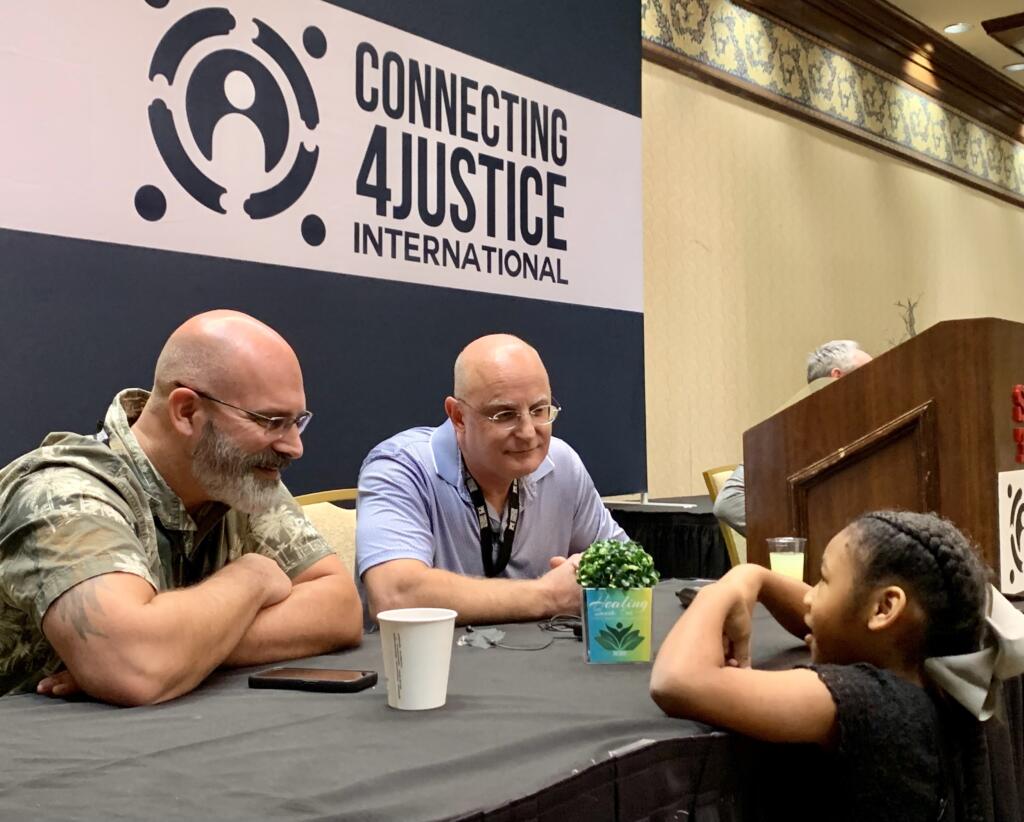
Photo by Connecting 4 Justice International depicts speakers Kyle Hedquist and Mark Wilson conversing with audience member McKenna at the Connecting 4 Justice Annual Conference.
Present, Approachable, and Worthy of Engagement
This photo I took in November 2025 at our annual conference bringing people together to talk about the impact of incarceration on our society clearly shows how a child experienced Kyle—present, approachable, and worthy of engagement throughout the conference. If a child can see the good in a person, shouldn’t that compel us as adults to reevaluate our own assumptions? Throughout the years, other Connecting 4 Justice International conferenceattendees include victims, wardens, city officials, judges, family members, formerly incarcerated, law enforcement, social workers, lawyers, policy makers, non-profits, clergy and community members.
If the Salem community is genuinely committed to safer communities, Kyle’s service on the Community Police Review Board should be understood as an asset—not a liability.
Boards like this exist to strengthen public trust, increase transparency, and incorporate diverse perspectives into oversight processes. Kyle brings something few others can: direct experience with the criminal justice system from the inside, paired with years of post-release advocacy, education, and policy work.
Concerns raised by unions, public officials, and residents deserve to be acknowledged—not dismissed. Victims’ voices matter. Public trust matters. Safety matters. But it is precisely because these things matter that boards like the Community Police Review Board should include people who understand the system from multiple vantage points. Excluding anyone with a criminal record—regardless of rehabilitation, time passed, or demonstrated contribution—risks reinforcing the very cycles of harm we claim to want to break. Considering 1 in 3 people in the united states have a criminal record, maybe it is time to have a more meaningful dialogue.
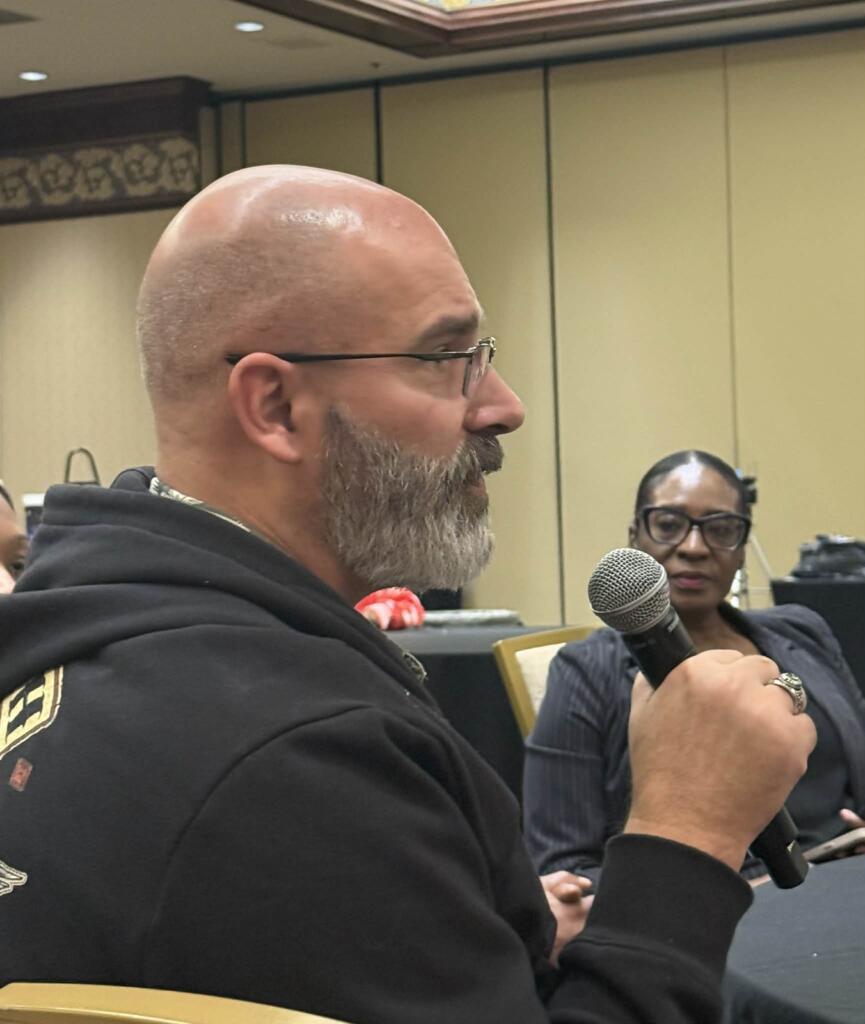
Kyle Hedquist talks with the group during the 2025 Connecting 4 Justice International Annual Conference
As a Society We Believe in Rehabilitation
Kyle’s presence on the board does not erase victims’ experiences, nor does it grant him authority over discipline or employment decisions. The board itself has limited power, as even council members have acknowledged. What it does provide is a forum for dialogue, oversight, and accountability—one that is strengthened, not weakened, by including perspectives shaped by lived experience and long-term transformation.
We often say as a society we believe in rehabilitation. We say we want people to return to society as contributing members. We say accountability should lead to growth and change. Kyle Hedquist’s journey tests us to consider whether we truly mean those words.
His past cannot be undone—but it can inform a more thoughtful future.
Accountability and Transformation
His involvement in civic life should be seen as an opportunity to bridge divides between communities and institutions, not widen them. When we invite people who understand the justice system from all sides to participate in oversight and dialogue, we move closer to a society grounded in accountability, dignity, and shared responsibility.
If we want safer, more inclusive communities, we must be willing to expand who we trust to help build them. Kyle’s continued service represents not the failure of the system—but the possibility of what accountability and transformation can look like when we allow people to grow beyond their worst mistakes.
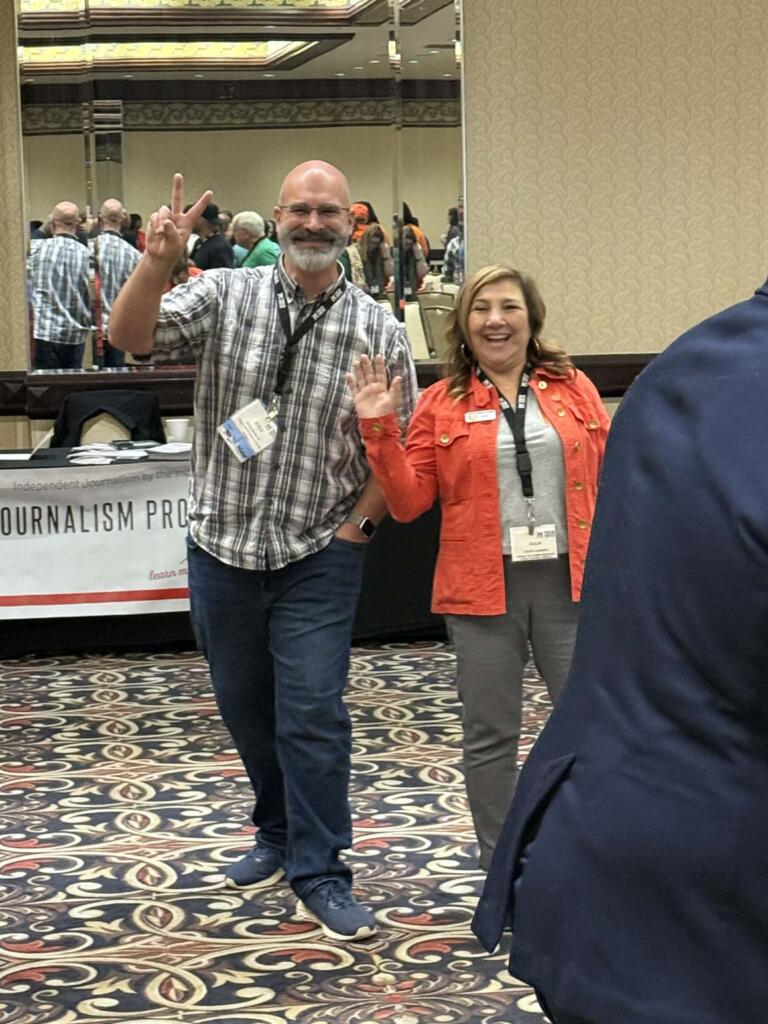
Kyle and Julia Lazareck - Connecting 4 Justice 2025 Conference
As a Society We Believe in Rehabilitation
Let us focus not solely on fear, but on evidence. Not just on the past, but on the present actions and future contributions. And let us commit to meaningful dialogue that strengthens public trust while honoring both accountability and the possibility of redemption.
Show up. Speak up. Partner up. Let’s make justice real—together.
Kayla is a high-energy business leader with over 25 years of experience. She works with companies ranging from small business to Fortune 50. Kayla is also the director of the Connecting 4 Justice International Conference. It plays a pivotal role as a forum to bring together families of prisoners, educators, employers, individuals with past incarceration experiences, law enforcement and professionals connected to the carceral system.