By Kayla Victor, Chair Connecting 4 Justice International
In a world that often encourages young people to focus narrowly on grades, careers, and personal success, Karthik Veeramallu is asking a different question:
What if knowledge could be used to reconnect people—not just advance ourselves?
A senior at Obra D. Tompkins High School in Katy, Texas, Karthik is deeply immersed in mathematics, physics, and engineering. But what makes him stand out isn’t just how he solves equations—it’s how he thinks about people.
Because to Karthik, understanding the world isn’t just about formulas on paper. It’s about understanding the systems we live in—and the people often left out of them.
Curiosity That Doesn’t Stay in a Box
Most students pick a lane. Karthik builds bridges between them.
His love for physics started early—sparked in fifth grade by curiosity and imagination.
Inspired by the Spy School book series, he didn’t just read the stories—he reached out to the author, asking for a sneak peek of the next book. That moment says a lot about who he is: someone who doesn’t wait for doors to open—he knocks.
Today, that same curiosity shows up in the way he approaches science. He’s fascinated by unconventional problems—the kind that don’t have neat, predictable answers. The kind that require you to sit with uncertainty and think differently. He described creating a virtual hologram as one of the coolest things he’s done—a perfect example of how he brings imagination into technical spaces. Because for him, science isn’t rigid. It’s creative. It’s a lot like solving a puzzle where the picture keeps changing.
A Rising STEM Leader—with Purpose
Karthik’s academic achievements are impressive by any standard—qualifying for the U.S. Physics Olympiad (USAPhO) exam and the AIME, placing him among the top high school students in physics and mathematics nationwide.
At his school, he serves as President of the Physics Club and as an officer in the Math Club, creating spaces where curiosity is contagious and problem-solving becomes a shared experience. He’s also fluent in Java programming, building models that simulate real-world systems.
But what matters most is how he chooses to apply that knowledge.
Karthik Veeramallu
Karthik has intentionally turned his analytical mindset toward one of society’s most overlooked and misunderstood challenges: the stigma surrounding incarceration—especially its impact on families.
Through independent research and meaningful conversations with individuals directly impacted by the justice system, he has worked to better understand recidivism not just as a statistic, but as a lived experience. He has listened to stories from people navigating reentry, as well as from family members—children, parents, and partners—who often carry an invisible weight of judgment and isolation.
What he discovered is something data alone rarely captures:
When someone goes to prison, the sentence doesn’t just affect one person—it ripples outward, shaping entire families and communities. Children may face bullying or silence. Families may withdraw out of fear of judgment. Opportunities shrink—not because of ability, but because of perception.
Karthik is working to challenge that.
By approaching stigma the way a scientist approaches a flawed system, he asks: Where is the breakdown happening? And more importantly, how can we rebuild it in a way that restores dignity instead of reinforcing shame?
One of society’s most overlooked and misunderstood challenges: the stigma surrounding incarceration—especially its impact on families.
Thinking Several Moves Ahead—On and Off the Board
Karthik is also a competitive chess player, part of the team that won the Second Annual Chess Tournament in February 2026—just a year after the club was formed.
Chess is often described as a game of strategy, but it’s really a lesson in perspective. Every move has consequences. Every decision requires you to think several steps ahead. In many ways, it mirrors life—and even policy. You don’t just react. You anticipate.
It’s no surprise that skills developed on a chessboard translate so naturally into leadership, science, and advocacy.
There’s a reason even leaders like Warren Buffett have long championed strategic games like bridge. He once joked that he wouldn’t mind being in jail if he had three good bridge partners—a lighthearted comment that points to something deeper:
Connection, challenge, and shared thinking can transform even the most confined environments.
Connection, challenge, and shared thinking can transform even the most confined environments.
And that idea—connection as a catalyst for change—shows up again in Karthik’s work.
Expanding Access: Leveling the Playing Field
Through his role with ParagonX Academy, a student-led nonprofit, Karthik helps make STEM education more accessible to students regardless of financial background. Think of it like this:
Talent is everywhere—but opportunity isn’t.
ParagonX works to close that gap by offering free curricula and resources, making complex scientific ideas more approachable. But Karthik’s impact goes beyond academics.
In many ways, he is also helping reframe how young people see themselves in the face of adversity—including those navigating the stigma of having an incarcerated loved one. Just as complex scientific concepts can feel intimidating until someone breaks them down, the experience of incarceration can feel isolating and overwhelming for families—especially when layered with societal judgment.
Karthik is helping shift that narrative. By encouraging open dialogue and creating spaces where difficult topics can be explored without shame, he is making it easier for others to see that their circumstances do not define their potential.
Because stigma thrives in silence—but loses power in understanding.
From Equations to Empathy
What truly sets Karthik apart is his willingness to step outside of STEM and into something much more complex: the human experience. Through research and conversations—including interviews with over 15 individuals—he explored the stigma surrounding incarceration and reentry, studying not just systems, but the emotional and social barriers people face long after a sentence is served. He examined models in places like Norway, where rehabilitation and reintegration have significantly reduced recidivism, and began asking:
What are we missing here?
But instead of stopping at research, he took action. Karthik turned his goal into a mission:launching the podcast WeLuv, where he and others interview incarcerated individuals, their families and others working inside and outside the carceral system—helping challenge stigma and humanize overlooked stories. Building on that impact, he is expanding his vision nationwide through his new initiative, Recreate Recidivism, which creates opportunities for youth to engage in podcasting with incarcerated voices and drive broader, meaningful change.
Rewriting the Narrative
Karthik co-founded ReNarrative: The Recidivism Foundation, an initiative focused on sharing authentic stories from people impacted by incarceration. Because sometimes, the biggest barrier isn’t policy—it’s perception. If systems are like machines, then stigma is like rust. It builds over time, quietly weakening everything it touches—opportunities, relationships, self-worth.
For families, that rust can show up in subtle but damaging ways: lowered expectations, social distance, or the quiet assumption that their story is something to hide. ReNarrative works to strip that rust away. By amplifying real voices—especially those of families and individuals who are too often reduced to labels—the initiative replaces judgment with understanding and distance with connection.
It reminds us that people are more than their worst moment—and that families should never have to carry a sentence that isn’t theirs.
Because data can inform us—but stories move us.
Where Science Meets Humanity
At first glance, physics and prison reform might seem worlds apart. But Karthik sees the connection clearly. Physics teaches us to:
Analyze systems
Identify patterns
Understand cause and effect
Those same principles apply to social challenges.
Why do people reoffend?
What systems are failing?
Where can intervention make the biggest impact?
It’s the same mindset—just applied to human lives instead of equations. And maybe that’s the future we need more of:
Not just experts in one field—but bridge-builders between many.
Looking Ahead
As Karthik considers his next steps—whether at the University of Texas at Austin or institutions like Harvard—one thing is certain:
His path won’t be limited to a single discipline.
He represents a new kind of leader—one who can move seamlessly between science and social impact, logic and empathy, innovation and humanity. And in a time when the world often feels divided, that kind of thinking matters more than ever.
A Reminder Worth Holding Onto
Young leaders like Karthik remind us that change doesn’t always start with power.
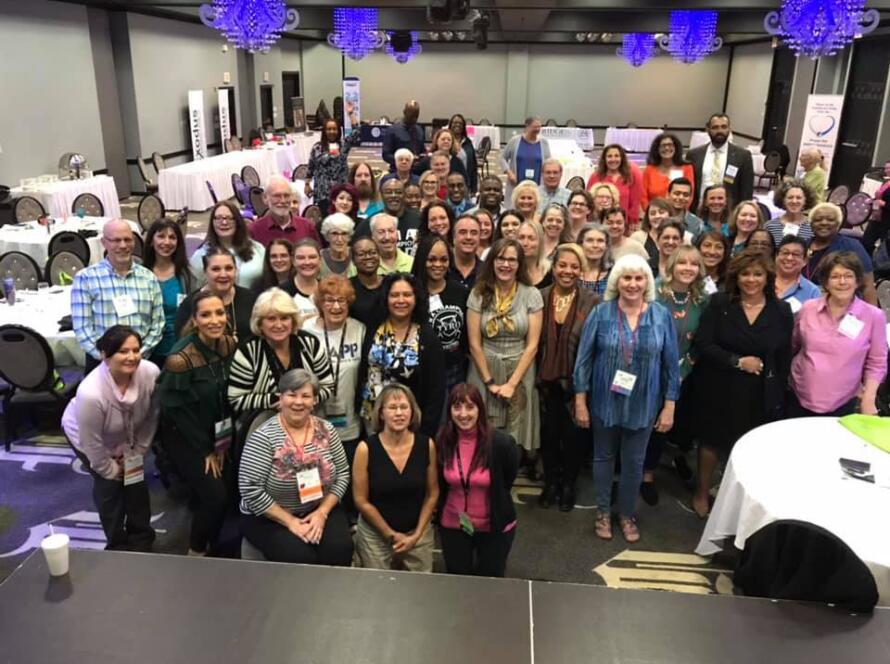
Kayla is a high-energy business leader with over 25 years of experience. She works with companies ranging from small business to Fortune 50. Kayla is also the director of the Connecting 4 Justice International Conference. It plays a pivotal role as a forum to bring together families of prisoners, educators, employers, individuals with past incarceration experiences, law enforcement and professionals connected to the carceral system.