We Talk About Collaboration. But Are We Actually Doing It?
What can a conversation over lunch teach us about reentry partnerships, lived experience, and the work of helping families through incarceration?
After a meaningful lunch conversation with my good friend Mark Grimes the other day, I found myself reflecting on something especially important to me: the power of collaboration and what we can accomplish when we bring people, ideas, and resources together.
Mark is a serial entrepreneur. As our mutual friend Dave Dahl, founder of Dave’s Killer Bread, might say, a “killer serial entrepreneur.” Mark has launched businesses with little more than the cash he had on hand, each becoming profitable within 90 days. But his entrepreneurial mindset extends well beyond building successful businesses. He focuses on developing social-purpose enterprises and helping other social entrepreneurs create sustainable business models that make a meaningful difference.
Through his work, Mark has helped countless entrepreneurs around the world turn ideas into opportunities and businesses into forces for good.
His LinkedIn description captures his philosophy beautifully:
“Do. Be. Do. Be. Do. Be kind, honest & optimistic. Live & work with purpose, meaning & positive social impact.”
That philosophy resonates with me, particularly when thinking about the nonprofit sector, social entrepreneurship, and the work required to build stronger, safer communities.
It also brought me back to a question we should be asking ourselves more often:
Are we truly collaborating, or are we simply talking about it?
We include collaboration in mission statements, partnership agreements, grant applications, conference presentations, and organizational strategies. But when it comes to creating safer communities, supporting families, reducing recidivism, addressing the impact of incarceration, and creating opportunities for people returning home, collaboration isn’t just a nice idea. It is essential.
The challenges facing our communities are interconnected. Our solutions must be, too.
Yet organizations often operate independently, competing for limited funding, approaching the same partners, developing similar programs, and measuring success within the boundaries of their own missions. Meanwhile, the individuals and families they serve are left navigating disconnected services, systems, and resources.
Understanding the Bigger Picture
To understand why collaboration matters, we must recognize who is impacted by incarceration.
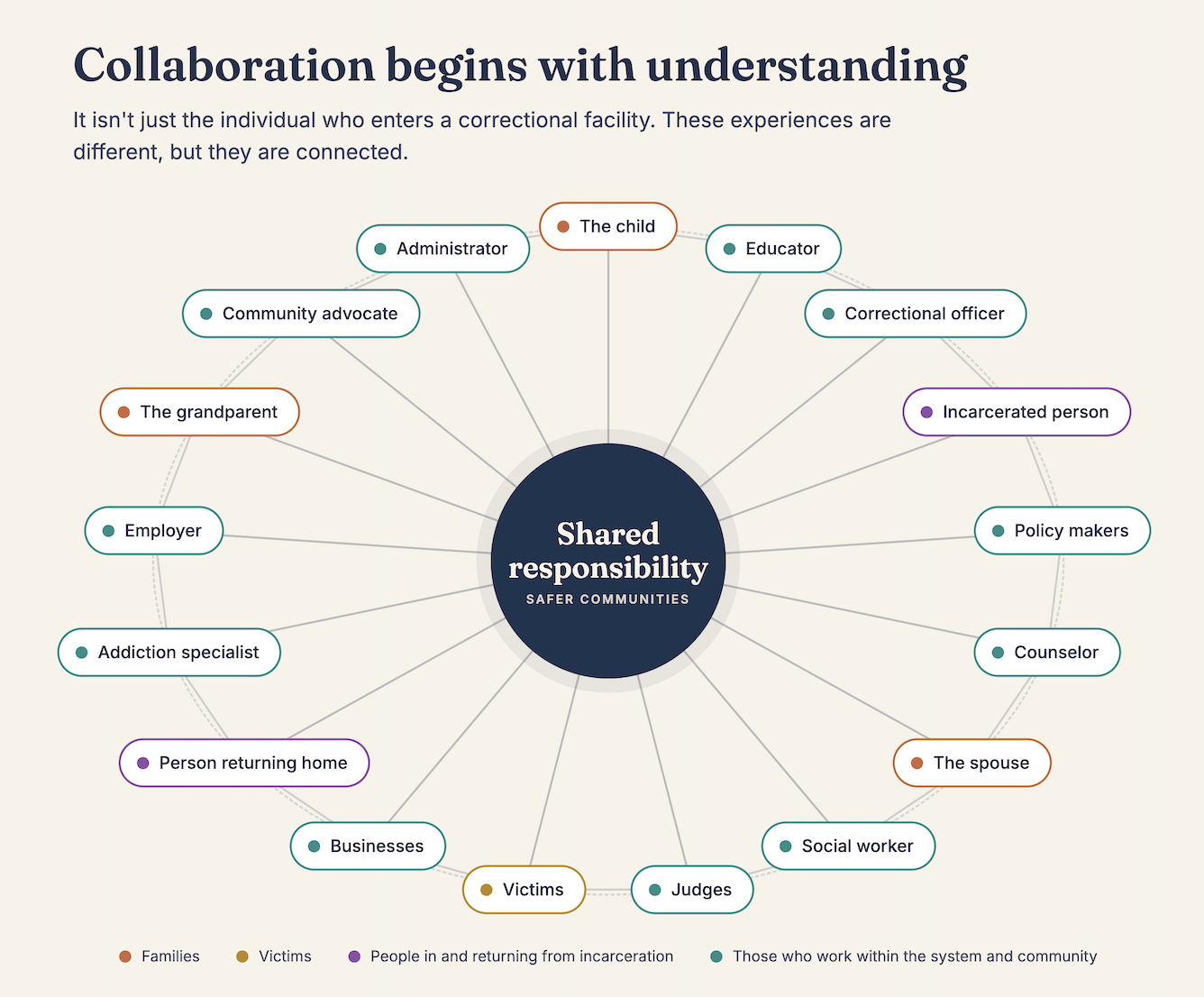
It isn’t just the individual who enters a correctional facility. It is the child wondering when their parent is coming home. It is the spouse trying to hold a household together, the grandparent suddenly raising grandchildren, and the family navigating stigma, financial hardship, and emotional trauma.
It is also the individual returning home who must rebuild relationships, find employment, secure housing, and rediscover their place in society.
And it extends to the correctional officer, educator, counselor, social worker, administrator, employer, community advocate, and countless others who interact with the carceral system and its consequences.
These experiences are different, but they are connected.
A person’s successful return home is influenced by their family, employment opportunities, housing, education, and community support. A child’s experience during a parent’s incarceration doesn’t necessarily end when that parent is released. A family’s ability to support a returning loved one is often affected by the same economic and social barriers facing that individual.
What happens inside correctional facilities also has a direct influence on what happens outside their walls.
If we fail to recognize these connections, we risk creating programs that address one piece of a much larger picture while leaving other critical needs unmet.
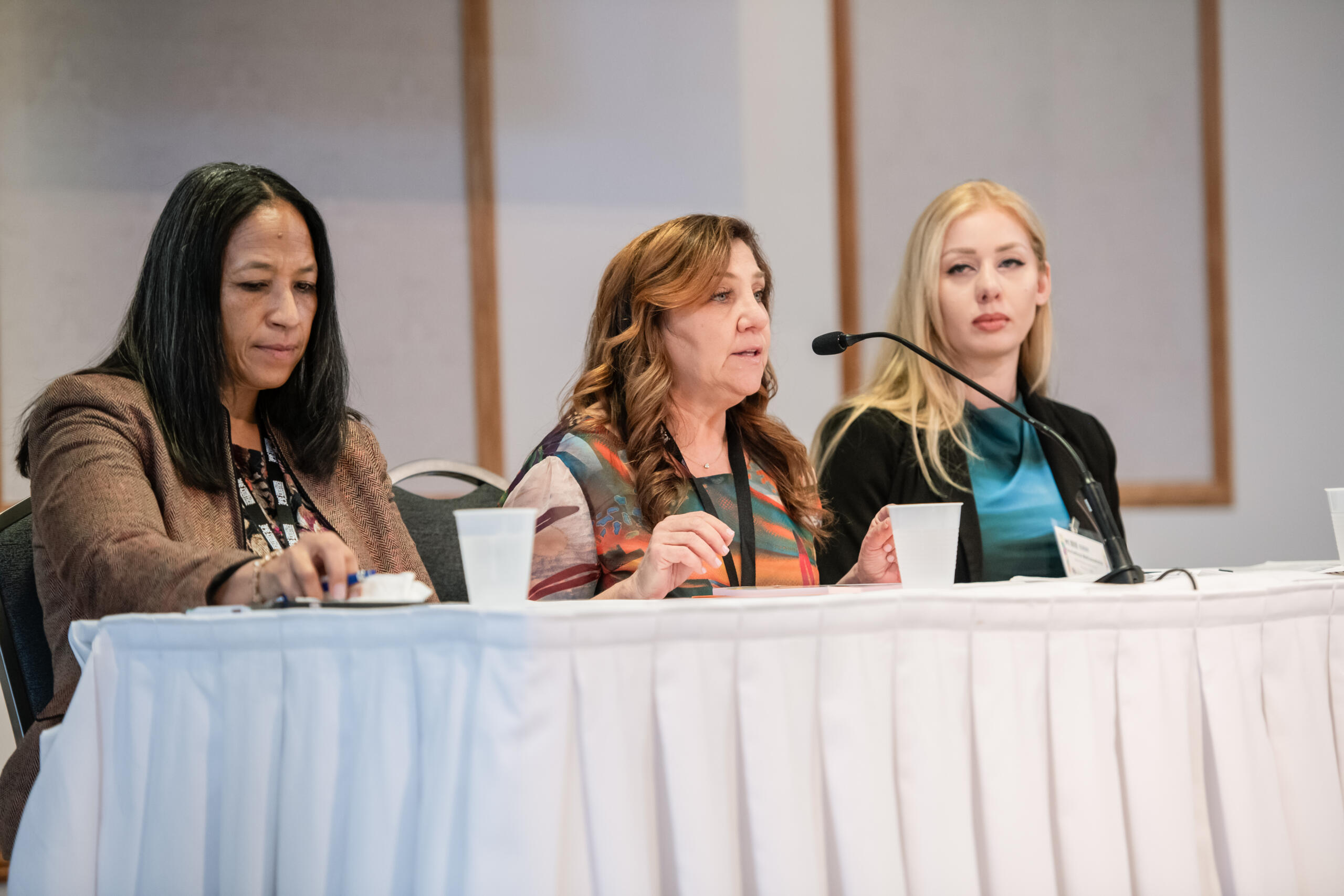
Through our annual Connecting 4 Justice conference, we have had the privilege of bringing together extraordinary organizations and individuals working across these areas. Their approaches may differ, but they share a common desire to improve outcomes for individuals, families, and communities impacted by the carceral system.
Consider the contributions each group brings:
- Nonprofits provide mentorship, education, workforce development, housing assistance, financial literacy, family support, and reentry services.
- Formerly incarcerated individuals are becoming entrepreneurs, mentors, advocates, educators, and leaders, using their lived experiences to create opportunities for others.
- Family-support organizations address the often-overlooked consequences of incarceration for children and loved ones, providing resources, advocacy, and connections.
- People who have experienced crime can identify needs and concerns that justice and safety initiatives must address to support healing.
- Correctional professionals bring essential insight into institutional realities and opportunities for rehabilitation, education, family connection, and preparation for release.
- Judges and the legal community help advance approaches such as specialty courts that balance accountability with treatment, rehabilitation, and support.
- Policymakers shape legislation and public policy, but meaningful progress requires understanding how those decisions affect the people implementing them and the individuals and families whose lives are impacted.
- Businesses and employers have opportunities to recognize talent and potential rather than allowing a criminal record to automatically define someone’s future.
Every one of these groups has an important piece of the puzzle. But no single group has the entire picture.
Imagine what could happen if these efforts were better connected.
What if workforce-development organizations had meaningful relationships with family-support organizations? What if correctional facilities worked directly with community organizations to establish continuity of support before and after release? What if families and formerly incarcerated individuals were included not only in conversations but also in designing, leading, and evaluating the programs intended to serve them?
Breaking down silos doesn’t mean every organization must do everything. It means understanding what we do well, recognizing what others bring to the table, and being willing to connect the dots.
Collaboration isn’t about losing your identity. It’s about expanding your impact.
Lived Experience Must Have a Seat at the Table
One of the most important elements of meaningful collaboration is ensuring that the people most affected by the issues we’re addressing have a genuine voice in the solutions.
In disability advocacy, there is a saying: “Nothing About Us Without Us.”
The same principle applies to incarceration, rehabilitation, reentry, and family support.
For too long, conversations about these issues have taken place without sufficient participation from the people who have experienced them firsthand.
Formerly incarcerated individuals are not simply success stories, statistics, or examples used to illustrate a problem. They are professionals, parents, entrepreneurs, community members, and leaders with knowledge that cannot be replicated in a classroom or policy briefing.
Families with an incarcerated loved one understand challenges that may not be visible to service providers or policymakers. Children have perspectives that adults often overlook. Their needs and experiences deserve to be considered.
Meaningful collaboration requires more than inviting someone to share their story at a conference or participate in a panel. It means including them in decision-making, program development, leadership, and the evaluation of outcomes.
It means listening without making assumptions and recognizing that expertise comes in many forms. Lived experience is one of them.
When professional knowledge, institutional experience, community insight, and lived experience come together, we create opportunities for solutions that are more informed, practical, and responsive to the people they are intended to serve.
Connecting the Inside and Outside
Meaningful change cannot happen exclusively inside correctional facilities or exclusively within the community. Both environments matter.
Neither perspective is complete without the other.
Imagine an individual preparing for release who has already been connected to a community organization, an employer, an educational opportunity, and a family-support network.
Rather than beginning the process of rebuilding their life after release, they return home with relationships and resources already in place.
That is what reentry partnerships can give someone before they even walk out the door.
It also means recognizing that correctional professionals are part of the broader community. Building relationships with people working inside the system does not mean abandoning our responsibility to advocate for improvements. Constructive relationships can create opportunities for dialogue, accountability, and meaningful progress.
We don’t have to agree on everything to work toward common goals. We do, however, have to be willing to listen, communicate, and identify where our efforts can intersect.
From Competition to Collective Impact
Nonprofits operate in an increasingly challenging environment. Funding is limited, demands are growing, and organizations are continually asked to demonstrate measurable outcomes.
Under these circumstances, it can be tempting to protect organizational territory, guard relationships, or view another organization’s work as competition.
But when organizations focus exclusively on protecting their own interests, the people they serve can lose out.
Consider what happens when services are disconnected. Two organizations spend limited funds developing the same program. A family has to repeat its story at every appointment. Someone returning home gets help finding work but has nowhere to live. A child receives emotional support while their family is still trying to find other services.
Questions to bring to your next partner meeting
- Who is already doing this work, and how can we support one another?
- What resources, relationships, and expertise can we share?
- Where are the gaps in services, and who is best positioned to address them?
- How can we connect individuals and families to a broader network of support?
- How do we measure success beyond the number of people attending our programs?
- Are the people most affected involved in shaping the solutions?
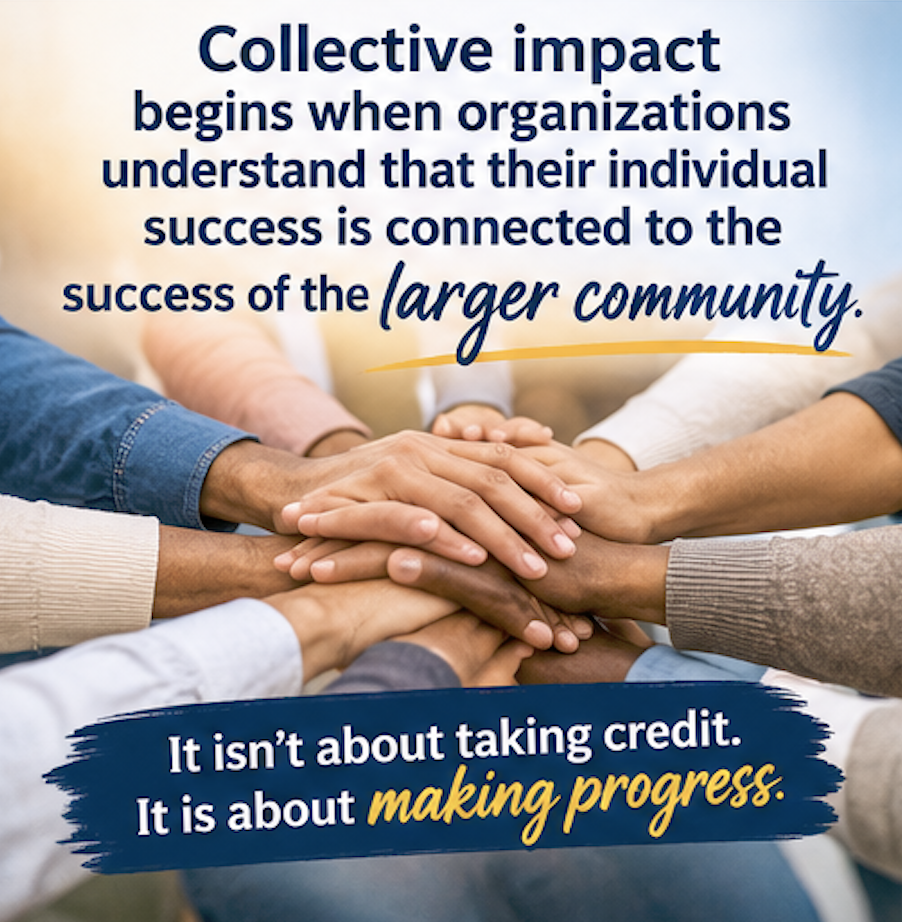
Collective impact begins when organizations recognize that their individual success is connected to the success of the larger community.
It isn’t about taking credit. It’s about making progress and moving the needle toward shared goals.
Relationships Before Transactions
Perhaps the most overlooked aspect of collaboration is that it is fundamentally about relationships.
A memorandum of understanding doesn’t automatically create a partnership. A meeting doesn’t guarantee alignment, and an introduction doesn’t necessarily lead to meaningful engagement.
Real collaboration takes time. It requires trust, consistency, transparency, humility, and a willingness to give as much as we hope to receive.
It means showing up when there isn’t a grant attached, making an introduction because someone else could benefit, and sharing knowledge without expecting immediate recognition. It also means celebrating another organization’s success because that success advances something bigger than any one of us.
It also means accepting that collaboration isn’t always easy.
Organizations have different cultures, priorities, resources, and approaches. There will be disagreements, competing timelines, and limited capacity. But differences shouldn’t automatically become barriers. They can be among our greatest strengths when approached with mutual respect.
We need fewer transactional relationships and more genuine connections.
What Do Reentry Partnerships Look Like in Practice?
It looks like:
- A formerly incarcerated entrepreneur mentoring someone preparing to return home.
- A nonprofit partnering with a community college to create educational and employment pathways.
- Policymakers communicating with correctional professionals who implement legislation and judges who interpret and apply the law.
- A family-support organization working with correctional facilities to maintain meaningful connections between parents and children.
- Employers recognizing potential rather than defining people by their past.
- Correctional professionals, advocates, attorneys, educators, social workers, families, and formerly incarcerated individuals sitting at the same table and working toward shared outcomes.
- Organizations sharing resources instead of duplicating services.
- Funders recognizing that sustainable change often requires investment in collaborative networks, not just isolated programs.
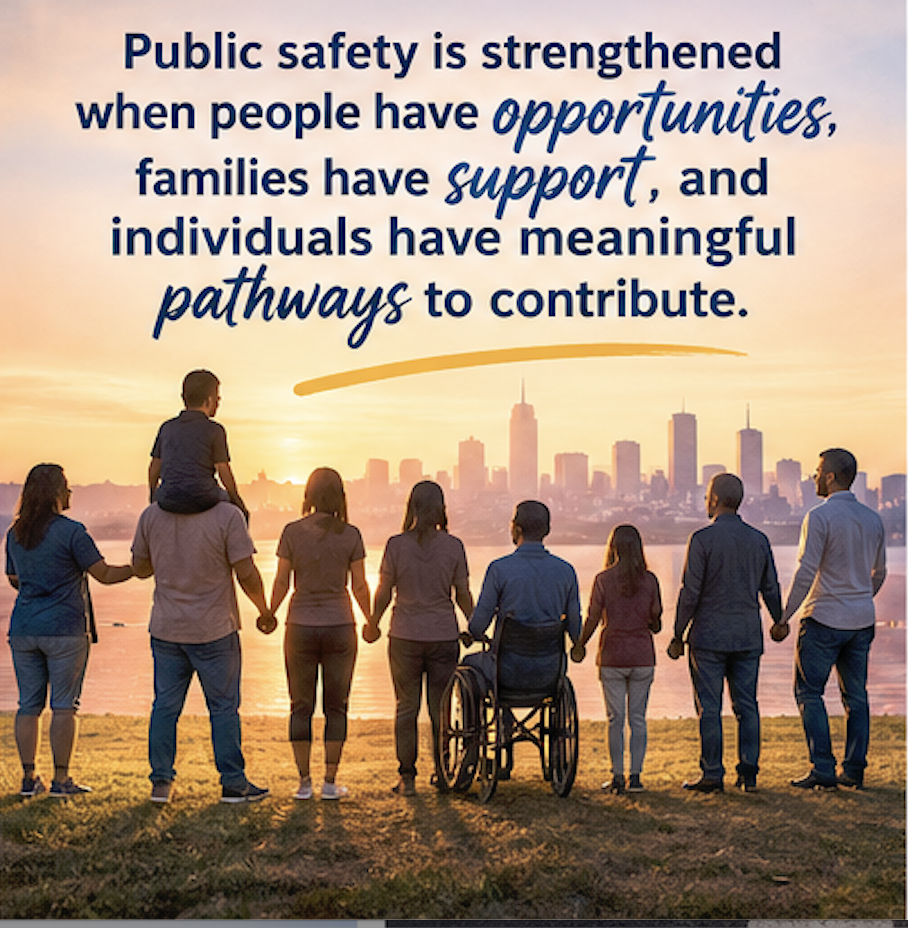
Ultimately, it looks like communities understanding that public safety is strengthened when people have opportunities, families have support, and individuals have meaningful pathways to contribute.
Safer Communities Are a Shared Responsibility
The purpose of this work should extend beyond individual programs, organizational recognition, or annual performance reports.
It should be about people.
Children deserve the opportunity to grow up with stability, support, and hope. Families deserve access to resources rather than being left to navigate the consequences of incarceration alone. Individuals returning home deserve opportunities to contribute, rebuild relationships, and become valued members of their communities.
We should be building communities where dignity, prevention, rehabilitation, accountability, and opportunity are not competing ideas.
When families are supported, children are not forgotten, individuals have meaningful opportunities after incarceration, and organizations work together to address barriers, we strengthen the conditions that contribute to safer communities.
This is not the responsibility of nonprofits alone. Nor does it belong exclusively to correctional institutions, government agencies, employers, families, or advocates.
It belongs to all of us.
The question isn’t whether one organization can solve these challenges. It can’t.
The question is what becomes possible when we bring our knowledge, resources, relationships, and commitment together.
We don’t need more conversations about collaboration without action. We need relationships that translate into meaningful partnerships, opportunities, and measurable change.
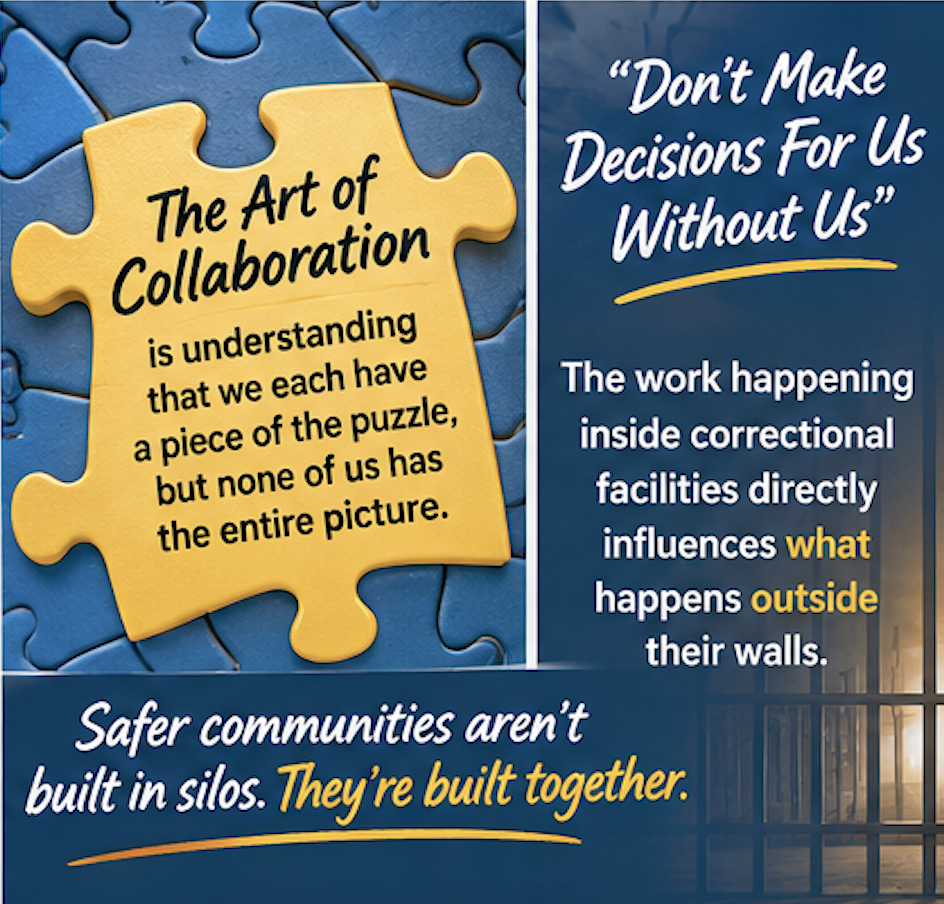
The art of collaboration is understanding that we each have a piece of the puzzle, but none of us has the entire picture.
And if our shared goal is safer, stronger, more compassionate communities, perhaps it’s time we stopped asking what we can accomplish individually and started asking what we can accomplish together.
Because safer communities aren’t built in silos. They’re built together.
The Connection Project
Bringing the Pieces Together
An initiative of Connecting 4 Justice International
The ideas behind this article are more than a conversation. They are an invitation to put collaboration into action.
Through The Connection Project, Connecting 4 Justice International wants to help bring together organizations, formerly incarcerated leaders, families, businesses, correctional professionals, and policymakers to identify opportunities for meaningful partnerships and collective impact.
We invite you to share:
- What are you working on?
- What resources or partnerships do you need?
- What expertise, connections, or resources can you offer?
- What is one problem we could solve better together?
Our objective is simple: Turn introductions into relationships, relationships into partnerships, and partnerships into measurable community impact.
If you believe we can accomplish more together, we would love to hear from you.
Connect with us. Share what you’re doing. Tell us what you need. Let’s explore what we can accomplish together.
Visit Connecting 4 Justice or email Kayla at kayla@connecting4justice.org.